









.png)
.png)
.png)
.png)
.png)
.png)
.png)
.png)

What Is Contract Redlining Software?
A contract redlining software is a program primarily used during contract negotiation that centralises the review, revision, and addition of provisions within a draft agreement while tracking all changes made to the document.
Its main purpose is to centralise communication among parties and provide visibility into revisions made throughout the contract review process. This ensures everyone works from the latest version of the agreement and prevents misunderstandings that can undermine trust between parties.
To support these capabilities, contract redlining software is often included as a feature within contract lifecycle management (CLM) platforms, although standalone solutions are also available.
Contract Redlining Software vs. Traditional Document Editors
Similar to how digital signature solutions address the limitations of wet signature workflows, contract redlining software simplifies the traditional redlining process, which relies on document editors and lengthy email chains.
This table summarises the challenges of traditional redlining workflows that contract redlining platforms solve.
How Do Redlining Software Work?
A contract redlining software includes features such as AI-assisted review, version control, audit trails, and approval workflows that help ensure negotiations remain transparent, centralised, and easier to manage throughout the contract review process.
While workflows vary across platforms, most contract redlining solutions follow a similar process from document upload to contract finalization.
Step 1: Upload the document and enter contract information.
Upload the agreement and its related attachments to your contract redlining platform or CLM solution.
The platform will then prompt you to enter key contract details, such as the contract value, contract type, and other relevant information.
Step 2: Run AI-powered contract redlining.
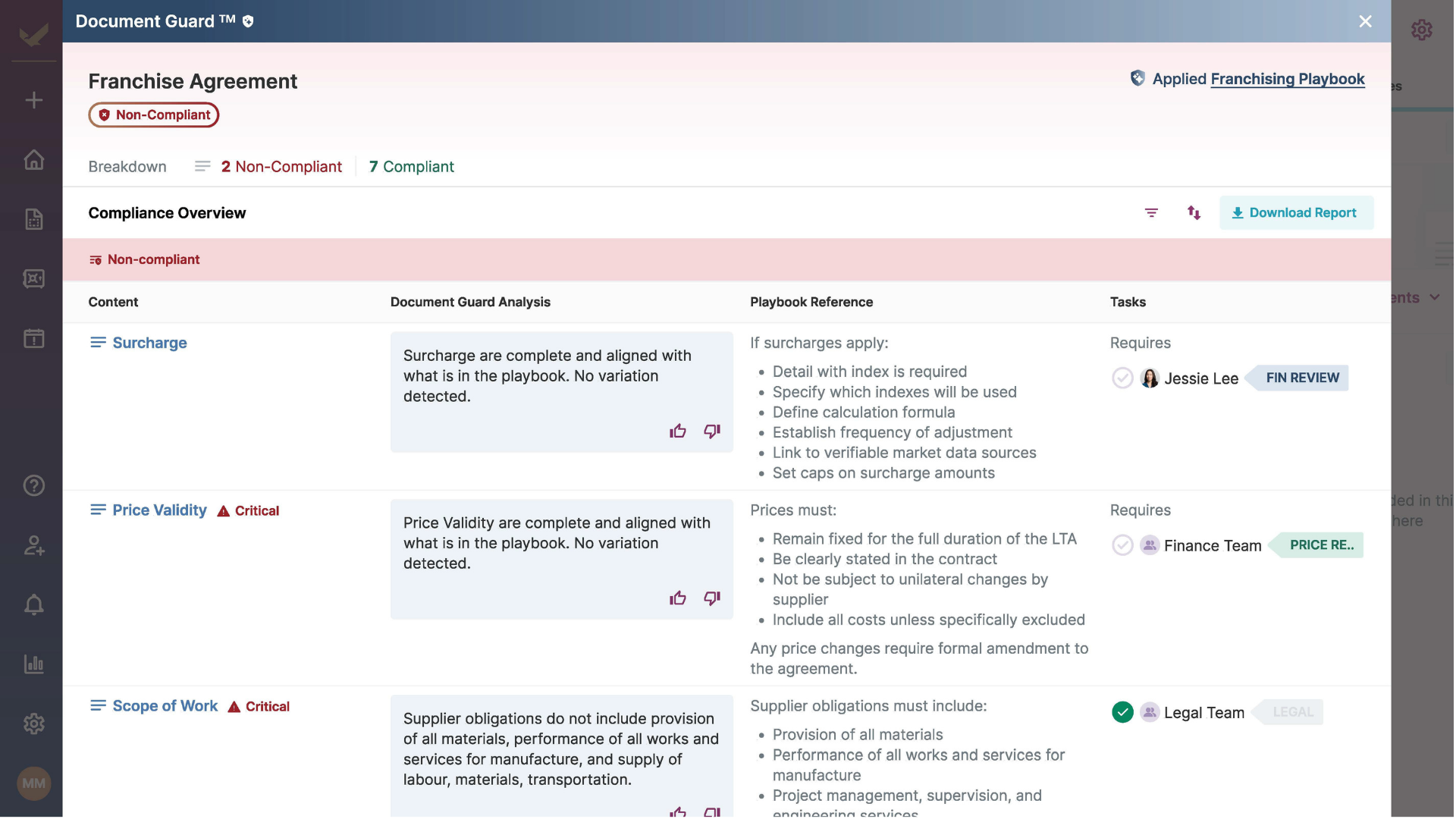
Initiate the platform's review process so the AI can scan the agreement and flag potentially problematic clauses.
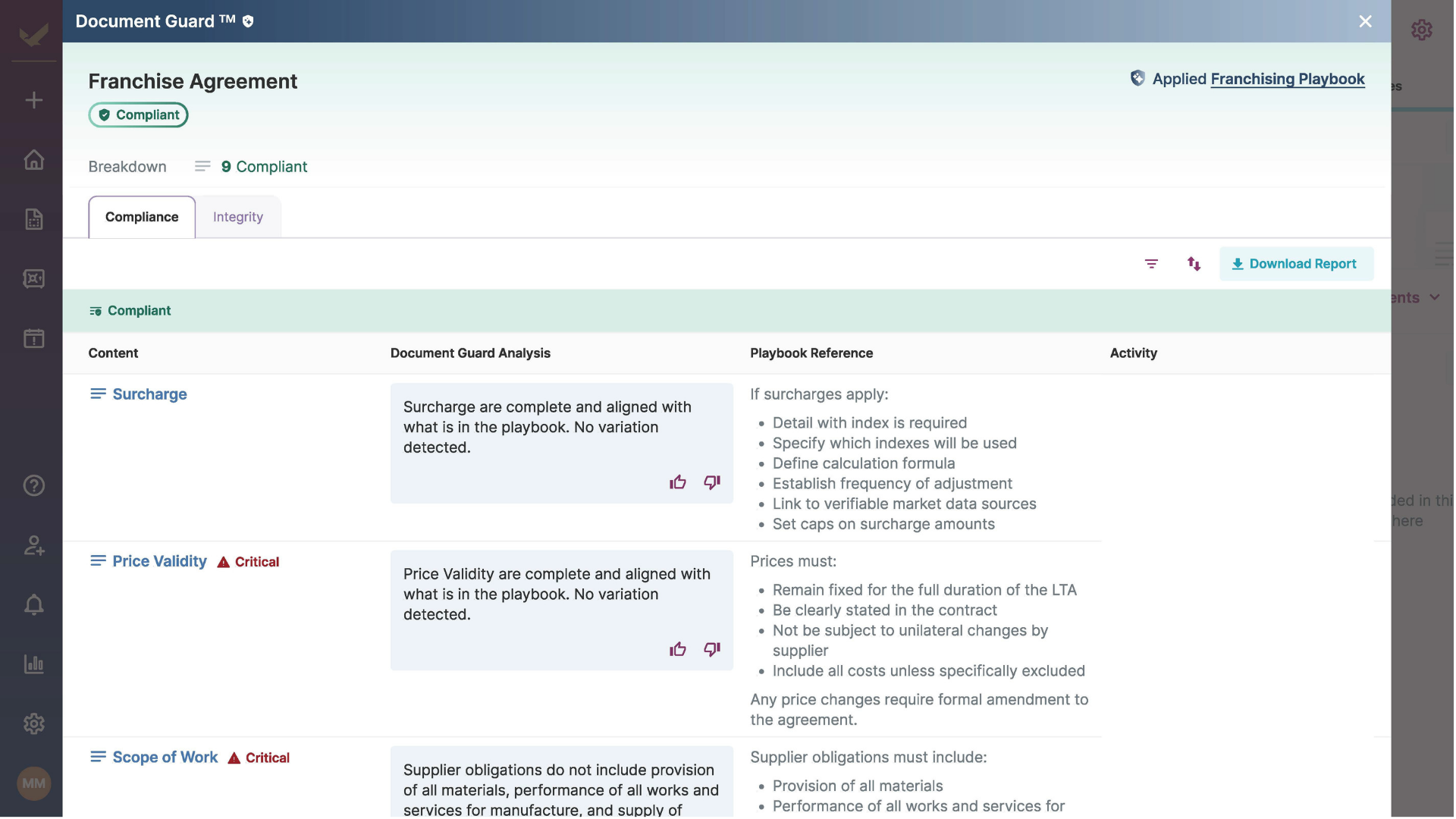
With advanced CLMs such as Lexagle, this step can be automated. The AI automatically (a) identifies compliant, partially compliant, and non-compliant clauses, (b) highlights provisions that may require revisions or additional language, and (c) recommends alternative wording based on predefined legal playbooks and policies.
Step 3: Review redlines with and assign tasks to internal collaborators.
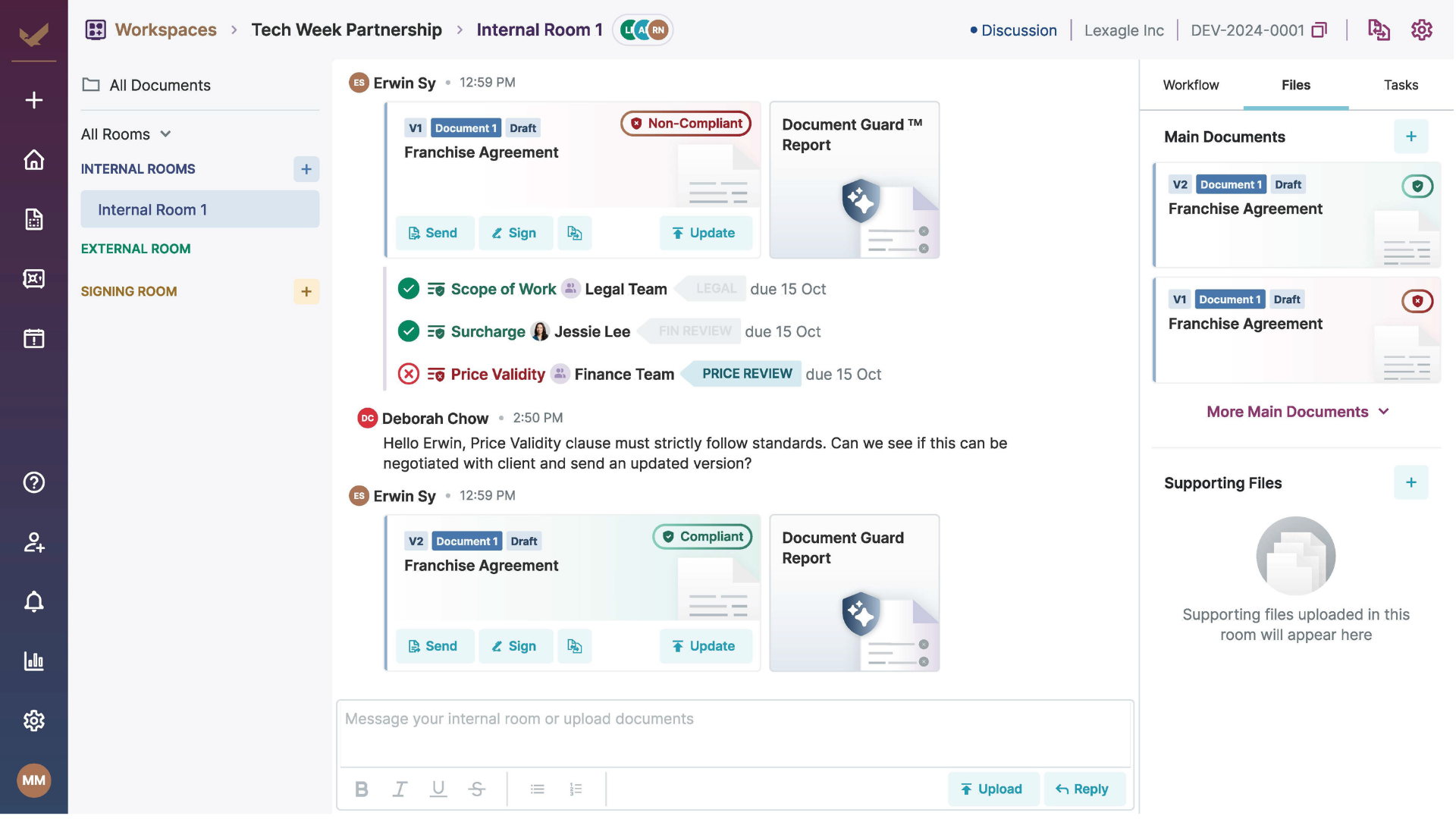
Invite internal stakeholders to the redlining tool’s internal workspace to review the findings and proposed revisions by AI and route approval tasks to the appropriate stakeholder.
Modern contract redlining solutions can automatically route non-compliant clauses for review and approval based on predefined workflows, ensuring the appropriate departments (e.g., legal, finance, or procurement) are involved when needed.
Step 4: Invite counterparties and initiate negotiation.
Once the draft agreement is ready for external review and approval, invite the counterparties to the contract redlining platform’s external workspace to review proposed terms and participate in negotiations.
Step 5: Collaborate on revisions and finalise the approved version.
Both parties negotiate terms, discuss proposed changes, and revise contract provisions as needed. As revisions are agreed upon, the draft agreement is updated accordingly and routed to the relevant stakeholders for review and approval before the contract is finalised.
Throughout the negotiation process, contract redlining solutions maintain a single source of truth by ensuring all parties work from the latest version of the agreement. Audit trails also provide visibility into what changes were made, when they were made, and by whom.
See AI-Powered Contract Redlining in Action
Experience how Lexagle’s Document Guard helps teams identify contract risks, recommend compliant language, automate approval workflows, and collaborate with counterparties in one centralised platform.
Key Features to Look For in Contract Redlining Software
When evaluating contract redlining solutions, consider the following features:
1. Risk Analysis
The contract redlining software should be able to assess clauses against your organisation’s predefined playbooks and determine their risk and compliance levels.
2. AI Insights and Recommendation
Look for a solution with AI capabilities that can recommend compliant revisions, alternative clause language, and corrective actions based on your organisation’s configured rules.
3. Integrations with Other Systems
The redlining tool should integrate with your CLM solutions, e-signature platforms, office applications, ERP systems, and other business tools to create a more connected and efficient workflow.
4. Audit Trails
The platform should provide visibility into what changes were made, when they were made, and by whom. This helps maintain transparency and accountability throughout negotiations.
5. Document Comparison
The software should allow users to compare contract versions and quickly identify additions, deletions, or modifications made between drafts.
6. Version Control and Security
Look for a redlining software that consolidates all approved changes into the latest version of the agreement while having safeguards for unauthorised modifications to maintain trust among parties.
7. Approval Workflows and Task Assignment
The software should allow users to assign review, revision, and approval tasks to the appropriate stakeholders throughout the contract negotiation process.
8. Ease of Use
The interface should be easy to navigate for both internal users and external counterparties, allowing them to participate in negotiations without extensive training.
9. Centralised Real-Time Collaboration
The software should centralise discussions and negotiations within a single platform, eliminating the need for fragmented email chains and disconnected communication channels.
10. Automated Task Reminders
The redlining tool should provide automated reminders to help ensure that stakeholders complete assigned tasks on time, reducing delays throughout the review process.
Best Contract Redlining Software in 2026
While many CLM solutions provide contract redlining functionality, their capabilities can vary significantly. Some prioritise workflow management, while others focus on ease of use and collaboration. Given the involvement of external counterparties in contract negotiations, usability and collaboration can be just as important as the redlining capabilities themselves.
To help you evaluate your options in 2026, the table below examines some leading CLM solutions with robust AI-powered contract redlining features.
Core Redlining Features
AI Features
Collaboration & Workflow Management Features
Integration and Accessibility Feature
Next Steps: Choosing the Right Redlining Software
Once you've shortlisted your options, a product demonstration is the best way to see how these contract redlining solutions support your contract redlining process.
Discover how your team can simplify redlining, approvals, and negotiations with an AI-powered contract lifecycle management platform. Take a Closer Look at Lexagle.