









.png)
.png)
.png)
.png)
.png)
.png)
.png)
.png)

What Is Contract Redlining?
Contract redlining is a standard process during contract negotiations where parties mark existing terms in a draft to propose revisions, deletions, or additions. Its primary purpose is to make these proposed changes immediately visible, ensuring transparency and allowing both sides to review and consent to the final terms of the agreement.
In business, this serves as a critical record that prevents unauthorised modifications from being overlooked and ensures that all parties are fully aligned before the agreement is signed.
How Contract Redlining Has Evolved
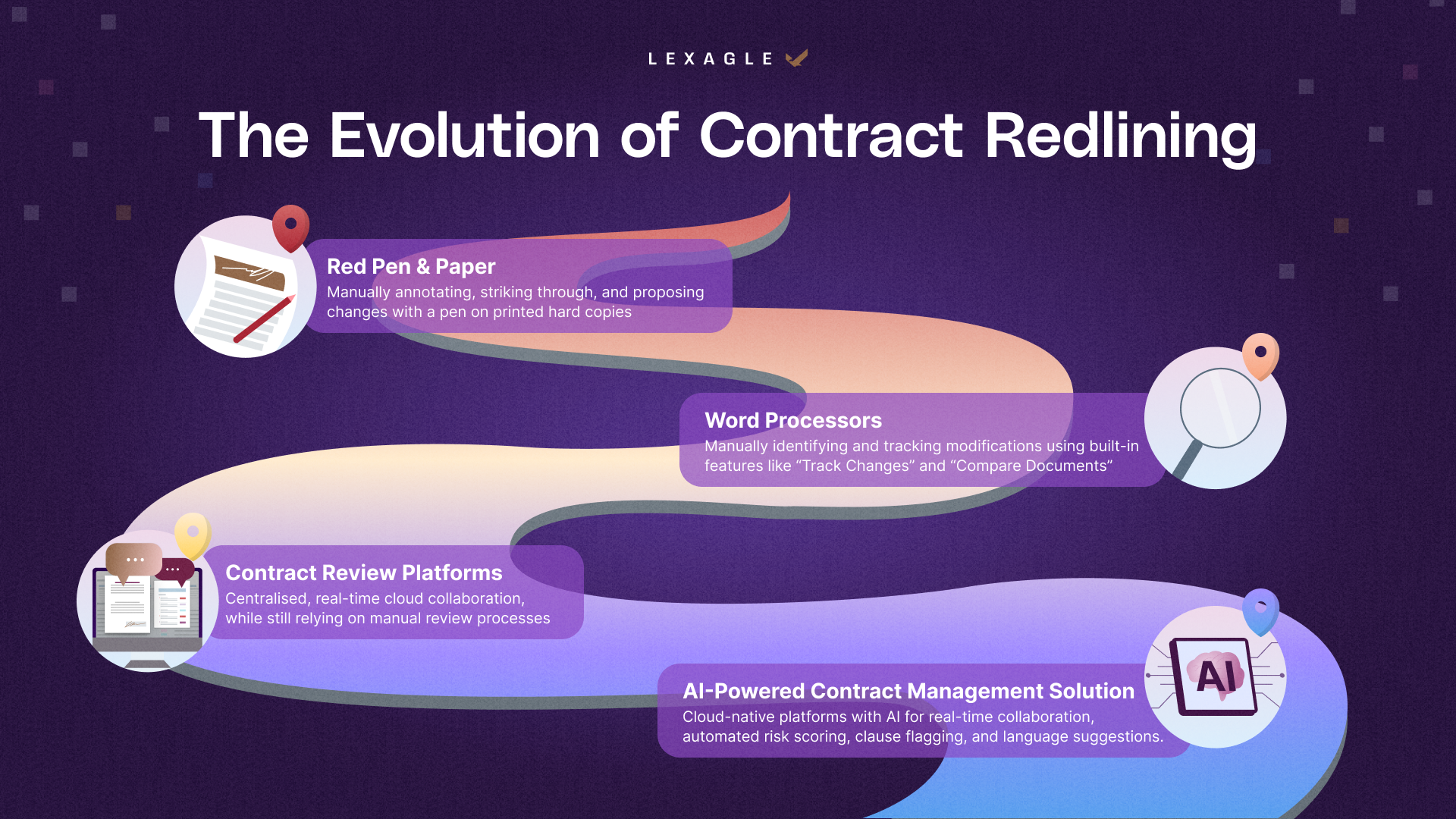
1. The Era of Red Pen
Contract redlining initially involved legal teams using a physical copy of a draft agreement and a red pen to annotate, strike through, and add proposed changes. This is how the term redline, referring to the practice of marking terms that required changes in red ink, was coined.
The main drawback of this process was the intensive manual labor involved: underlining each term, determining whether to omit it, and deciding what language should replace it. This manual approach was highly prone to human error, as critical terms requiring revision could easily be overlooked.
2. The Shift to Word Processors
With the rise of digital tools, redlining shifted from physical papers to word processing software, typically MS Word. This tool introduced the “Track Changes” feature, which could display a history of edits. However, it has a caveat: if the counterparty forgot to turn it on, their modifications would go unnoticed.
MS Word’s “Compare Documents” function later offered better security for identifying these gaps. However, the process remained time-consuming, as it still required manual identification and review of specific terms.
3. The Rise of Contract Review Platforms
Contract review platforms later solved the tracking issues of earlier methods by introducing centralisation and version control. These platforms serve as a single location where a draft can be generated and where all parties can collaborate on edits in real-time.
Because they maintain a comprehensive version history, users are always assured they are working on the latest iteration of the document. However, despite these advancements, the manual flagging of specific clauses remained a resource-intensive task.
4. The AI Contract Review Revolution
Advancements in AI have permeated contract review through the development of AI-powered contract management solutions. These tools offer all the benefits of traditional contract review platforms, such as centralised, cloud-based, real-time collaboration that allows for anytime, anywhere access, while introducing more powerful capabilities.
Specifically, they automatically flag terms that deviate from a company’s standard playbook and provide suggested revisions based on those guidelines, effectively streamlining the entire redlining process.
Stop Manually Flagging Every Clause
Reduce the manual work involved in contract review with an AI-powered contract redlining software that automatically identifies nonstandard terms, highlights potential risks, and suggests revisions based on your approved contract playbook.
What Does Contract Redlining Look Like Today?
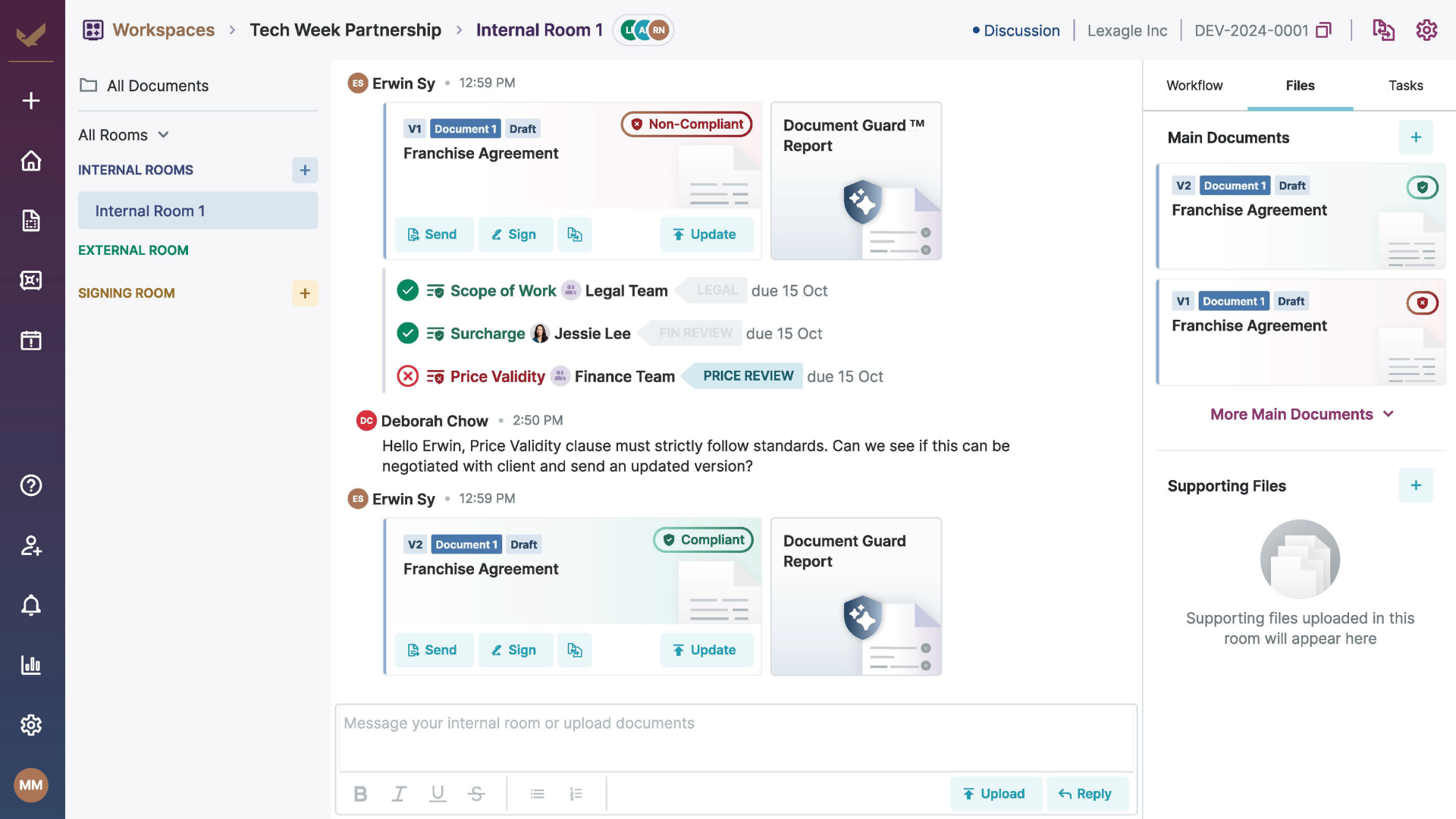
In 2026, contract redlining has significantly evolved from handwritten edits and MS Word track changes. Many organisations now conduct contract reviews within AI contract management systems to centralised negotiations, approvals, version histories, and stakeholders collaboration in a single workspace.
Thus, the redlining process has become faster and more intelligent. Business teams can now leverage AI to identify potential risks, detect deviations from approved language, and prioritise clauses that require attention, instead of manually reviewing every provision line-by-line.
Today, a typical redlining workflow begins when one party uploads a contract draft into a shared review environment and invites counterparties or internal stakeholders to participate in the negotiation process.
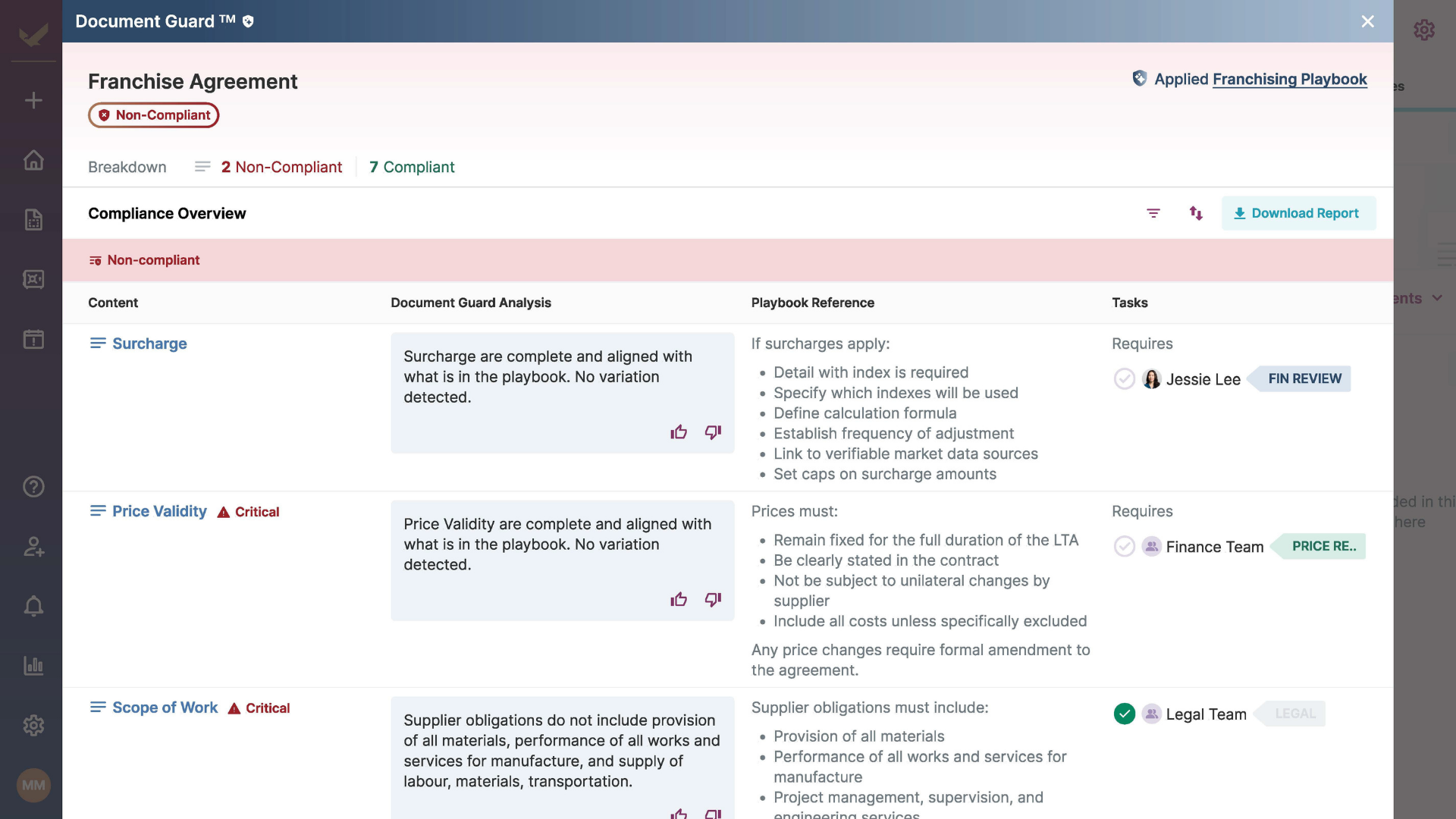
Once the document is uploaded, AI can analyze the agreement against a company’s predefined standards and playbooks. Clauses that deviate from approved language, introduce unusual obligations, or present high risks can be automatically highlighted for review.
When provisions do not align with approved playbook standards, AI can surface the organisation's preferred negotiating position and recommend language for use during negotiations.
By combining legal expertise with AI-assisted analysis, modern contract redlining enables organisations to negotiate contracts more efficiently while maintaining visibility, consistency, and compliance throughout the contract lifecycle.
If you are looking to adopt a solution that supports AI-powered contract review and redlining, explore our guide to the best contract redlining software to compare leading platforms and find the right tool for your business.
Common Clauses That Get Redlined
Almost any clause can be negotiated. However, some provisions are redlined more frequently because they directly impact critical business areas like bottom-line financial exposure, risk allocation, and regulatory compliance. These include the following:
1. Indemnification Clauses
An indemnity clause determines which party is responsible for specific losses, damages, or legal liabilities arising from the agreement.
Given that they can significantly impact a party’s financial and legal exposure, they are often among the most heavily negotiated provisions in business contracts, like vendor agreements, procurement contracts, and partnership agreements.
During the redlining phase, parties commonly negotiate the scope and limitations under which indemnification should apply. The goal is to ensure that risks are allocated fairly and that neither party assumes responsibilities beyond what is reasonable.
For example, a client may seek broad protection against any issues arising from a SaaS solution, while the vendor may negotiate narrower indemnification obligations that are limited to risks within its control, such as intellectual property infringement, confidentiality breaches, or willful misconduct.
2. Payment Terms
Provisions related to payment are frequently redlined to clarify pricing structures, payment deadlines, late payment penalties, and invoicing requirements. Because these clauses directly impact cash flow and financial planning, they are often among the first commercial terms discussed during contract negotiations.
For example, a SaaS vendor may seek flexibility to adjust pricing as costs increase over time, while the client may negotiate limits on when and how subscription fees can be increased to improve budgeting certainty.
Given that clauses can significantly affect the financial exposure and contractual obligations of a business, teams must carefully review them before it is sent out for signatures. With contract redlining software, teams can identify potential risks, detect deviations from approved language, and assess proposed changes against the organisation’s playbook.
If you are looking for a more efficient way to manage contract redlining, See How Lexagle can support your contract review process.