












.png)
.png)
.png)
.png)
.png)
.png)
.png)
.png)
What is a simple contract?
As the name suggests, a simple contract is the simplest form of a legally binding agreement between two or more persons or parties. They can be either written or orally agreed upon deals, however, written contracts are preferred for multiple reasons.
- Firstly, they prevent one party from making the same verbal agreement with multiple other parties outside of the agreement, which will protect the business of the other party.
- Secondly, since written contracts spell out what both parties are promising to do and how they plan to do it, they prevent potential misunderstandings and genuine mistakes from happening in regard to the agreement. That being said, in some cases, oral agreements can still be ruled on by a judge in court.
Now that we’ve defined what a simple contract is, let’s discuss the elements within a simple contract.
What are the elements of a simple contract?
Intention of the Parties
One of the main requirements of forming a valid contract is the intention of the parties involved. What this means is that there must be an acknowledgment that both parties have intended for an agreement to be legally binding between them. This intention to the agreement should be mutually illustrated explicitly as well.
If an issue does arise where one of the parties failed to fulfill their promise to the agreement, a business can protect itself in court as the court will look at the following factors to determine the issues:
- Content of an agreement
- Language and conduct of the parties to an agreement
- Relationship between parties and the presumption arising out of that relationship
- Context in which the agreement was made
- Any other relevant surrounding circumstances
Offer and Acceptance of Agreement
The second element that creates a legally binding contract is an offer, followed by the acceptance of that offer. During the drafting process of a contract, an offer may be rejected or revoked and changed multiple times until it is finally set in stone. But until both parties agree to it, the contract cannot take place or be legally enforceable.
This acceptance must be clearly communicated as well. For example, imagine if someone offered to buy a house and stated that if they did not hear back from the owner they would take the lack of response as an agreement to own the house. In this example, an acceptance was not clearly communicated. Just because there is a lack of response does not mean the other party has agreed.
This acceptance of an offer should also be made by someone who has the authority to communicate the acceptance of that offer and should also be communicated to the offeror. In addition to that, once a contract is accepted, this acceptance should also be unconditional making it not subject to any conditions.
Consideration
The third required element of a simple contract is a consideration. This is the value given by one party to another in exchange for what is agreed upon, whether it be a product or service.
A consideration generally consists of something that benefits the other party. It could be a service or a product, but generally, a consideration comes in the form of money. You may think of consideration as a mutual exchange of promises.
Capacity to Enter
The fourth element that is crucial for a simple contract to be valid is whether or not each party has the capacity to enter into it. If one party falls within a category that considers them to lack the capacity to enter into a contract, drafting one is pointless as the contract won’t be enforceable against them.
For example, minors, which in most cases are those under the age of 18, do not have any capacity to enter into a contract. This is to protect those who may lack expertise and knowledge in a certain situation from getting taken advantage of.
Another example of people who cannot enter into a legal agreement would be those who are judged to be not mentally fit. This means that the person does not have the mental capacity to fully understand and demonstrate their understanding of the meaning and the effects of the words within the contract or just the transaction itself.
Terms
Lastly, for a simple contract to be valid, its terms must be included and sufficiently certain. The terms of a contract should allow all parties involved to receive their desired end goal which must arrive with no ill faith 一 which means no attempt at deception can be made.
Each party must abide by the terms and conditions set within the contract. These terms and conditions should include details regarding services, money, dates, timeframes, and all clauses. For example, in an agreement between a tenant and a landlord, the terms should state what the tenant must pay the landlord over what period of time while the landlord provides the property for the tenant to live in.
From this section of the article, you should have a better idea of what to include in a simple contract, and why those elements are necessary for a contract to be valid. But what happens when one party violates any of the agreed-upon terms and conditions of a contract? Let’s explore this.
What happens when a simple contract is breached?
A breach of contract occurs when one party breaks the terms of an agreement between two or more parties. This includes when an obligation stated in the contract is not completed on time or when it is not fulfilled.
There are four different types of contract breaches recognized today:
Minor breach
This type of breach occurs when one party is unable to or fails to perform some part of the contract, despite the service or item in the contract being delivered.
Imagine when a homeowner contracts someone to replace their windows and the contractor ultimately does replace the windows but uses a different material than what was specified in the contract. This failure to perform a certain part of the contract would be considered a minor breach because even though the outcome was delivered, it was not fully or completely delivered.
Material breach
In contrast to a minor breach, a material breach happens when one party ends up receiving something 一 whether it be a product or service 一 that is significantly different from what was agreed upon in the contract. Let’s go back to our window example.
Say the homeowner contracts someone to, again, replace their windows. They had asked for the same square shape for the window, however, the contractor decided to completely change their window while replacing it with an entirely different shape. Again, despite the outcome of a replaced window being achieved, it is significantly different from what was specified by the homeowner.
Actual breach
This is the most straightforward breach out of all contract breaches. It is when one party refuses to fulfill their side of the agreement either by performing their duties incompletely or just being unable to meet their responsibilities within the due date.
Anticipatory breach
Just like the name, an anticipatory breach is a breach that can be anticipated before it actually happens by one of the parties. This usually happens when one party states they will not be able to fulfill their duties within the due date before the date has come.
If a breach occurs, you can do a few things: sue for damages, ask for something specific to be performed or terminate the contract. When suing, you can sue for damages that include unpaid bills, money spent on resources such as equipment, or any other items related to the nature of the agreement.
Streamline the contract lifecycle from end to end
Contracts are at the core of every business. In every process, whether it is hiring a new employee, contracting a supplier or anything in between there is always a contract involved. Although simple contracts are one of the easiest contracts to draft up, we can make it even easier for you.
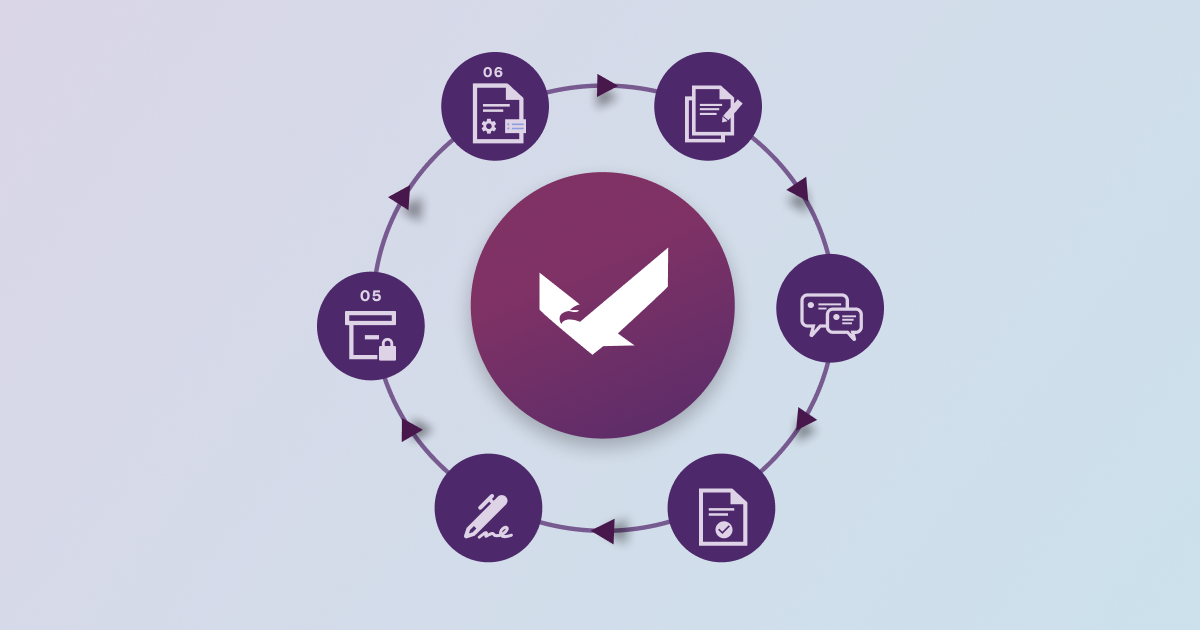
At Lexagle, we provide a modern, holistic platform that empowers organizations to drive contracts. With a focus on users and boosting simplicity, we’ll help you see immediate value in their investment with our contract management platform. Check out our features from drafting a contract to storage and retrieval here.
If your business is ready for the next step forward in this digital age, do not hesitate to contact us for a free demo today.


