












.png)
.png)
.png)
.png)
.png)
.png)
.png)
.png)
What Is a Wet Signature?
A wet signature (or wet ink signature) is a mark physically made by a person on a material — usually printed — contract or document to indicate their approval. It is traditionally used for signing contracts and other legal documents.
Wet signature can take different forms, including:
- Handwritten signatures – name signed with a pen on paper
- Marks or symbols – used in place of a full signature (e.g., initials or an “X”)
- Seals or stamps – valid in certain culture
While wet signatures remain common across many industries, modern organizations often need to sign documents both physically and digitally. Dedicated digital signing platforms help businesses manage this signing workflow by reducing manual effort and enabling secure remote execution where permitted.
Are Wet Signatures Still Legally Binding in 2026? (+ Use Cases)
While the digital transformation of business has driven the increasing adoption of electronic signatures, wet signatures remain globally recognized as legally binding. In fact, they remain mandatory for many high-stakes transactions, particularly those requiring notarization, where physical presence serves as a critical layer of authentication.
This includes agreements and documents involving real property:
- United States: Some states, like New York, require wet signatures for mortgages, deeds of trusts, and other collateral documents.
- Germany: The transfer of real estate, as well as the creation of mortgages or land charges, must be notarized with physical signatures to be legally valid.
However, since 2025, the acceptance of electronic signatures has expanded significantly. Many jurisdictions now recognize e-signatures for agreements that were previously valid only for wet signatures, following rapid evolutions in digital authentication methods.
Some examples include certain negotiable instruments (e.g., promissory notes & electronic bills of exchange) and financial documents (e.g., electronic bills of lading). Note that acceptance varies by jurisdiction, so it is important to consult your legal counsel to confirm compliance.
Once a legal team determines that a contract can be signed electronically — as is the case for many modern business documents — many organizations handle the process through an e-signature platform. This eliminates printing entirely and automates signing workflows while maintaining a secure, tamper-evident audit trail.
Wet Signature vs. Electronic Signature: How Are They Affecting Your Daily Operations?
While wet signatures remain essential for many high-stakes transactions, electronic signatures have become increasingly common in everyday business agreements. Understanding the mechanics of both methods allows you to design better operational workflows for your organization, especially since modern businesses require a hybrid approach: using electronic signatures by default, while reverting to wet signatures when legally mandated.
To help you navigate this hybrid landscape, the comparison below outlines the essential differences in how both signature types are executed, tracked, and stored:
As shown in the table, wet signatures are signed physically. As such, the signing process among counterparties is slower and less convenient, as time is expended on printing, courier logistics, and manual hand-offs.
Moreover, there is a risk of tampering from unmonitored alterations due to a reliance on physical verification. Nonetheless, because they are generally accepted as valid, they remain best for high-stakes agreements where e-signatures are still not considered legal.
On the other hand, in business, e-signatures are executed by digital means, typically through an e-signature solution. This provides the convenience of being able to sign from anywhere at any time, with the transmission being almost instant.
Digital signing platforms also offer advanced security features like digital encryption, identity verification, and audit trails that provide crucial safeguards against tampering. The speed, convenience, and security provided by e-signatures, particularly those executed via digital signing platforms, make electronic signing the preferred approach for businesses unless a wet signature is required.
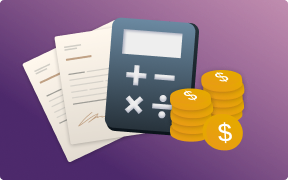
Calculating the Hidden Cost of Wet Signatures
Signing with wet signatures offer distinct advantages, especially for businesses with a low volume of contracts, as it remains a simple and universally accepted method across almost all jurisdictions and requires nothing more than a pen and paper.
However, as a business scales, the volume of documentation naturally piles up. This growth causes physical material expenses, such as paper, printing, and courier fees, to multiply quickly.
For an estimate of how these costs are impacting your budget, use our interactive estimator below to calculate your baseline costs:
This is why scaling organizations are increasingly moving toward hybrid contract signing workflows, opting for e-signatures through contract lifecycle management (CLM) solutions while applying wet signatures where necessary.
This approach gives businesses the speed, convenience, and tight security of digital signing without forcing them to completely abandon traditional compliance safety nets.
How To Turn Wet Signatures To Electronic Signatures?
Business teams can convert wet signatures into digital formats using two distinct execution tracks.
Option 1: Utilizing a Free Document Editor
The most basic method involves turning a physical signature into a digital image file.
Step #1: Capture the image. Sign a blank sheet of paper using black ink and take a clear, high-resolution photograph of it.
Step #2: Remove the background. Upload the photo to a background removal tool to isolate the signature lines and export it as a transparent PNG file.
Step #3: Apply to documents. Upload the PNG to a free editor (such as Adobe Acrobat Reader). From there, you can manually paste the image onto the signature fields and email the document to other signing entities.
Option 2: Utilizing a Digital Signing Platform
To eliminate version confusion and security gaps, organizations typically centralize this process within a digital signature platform.
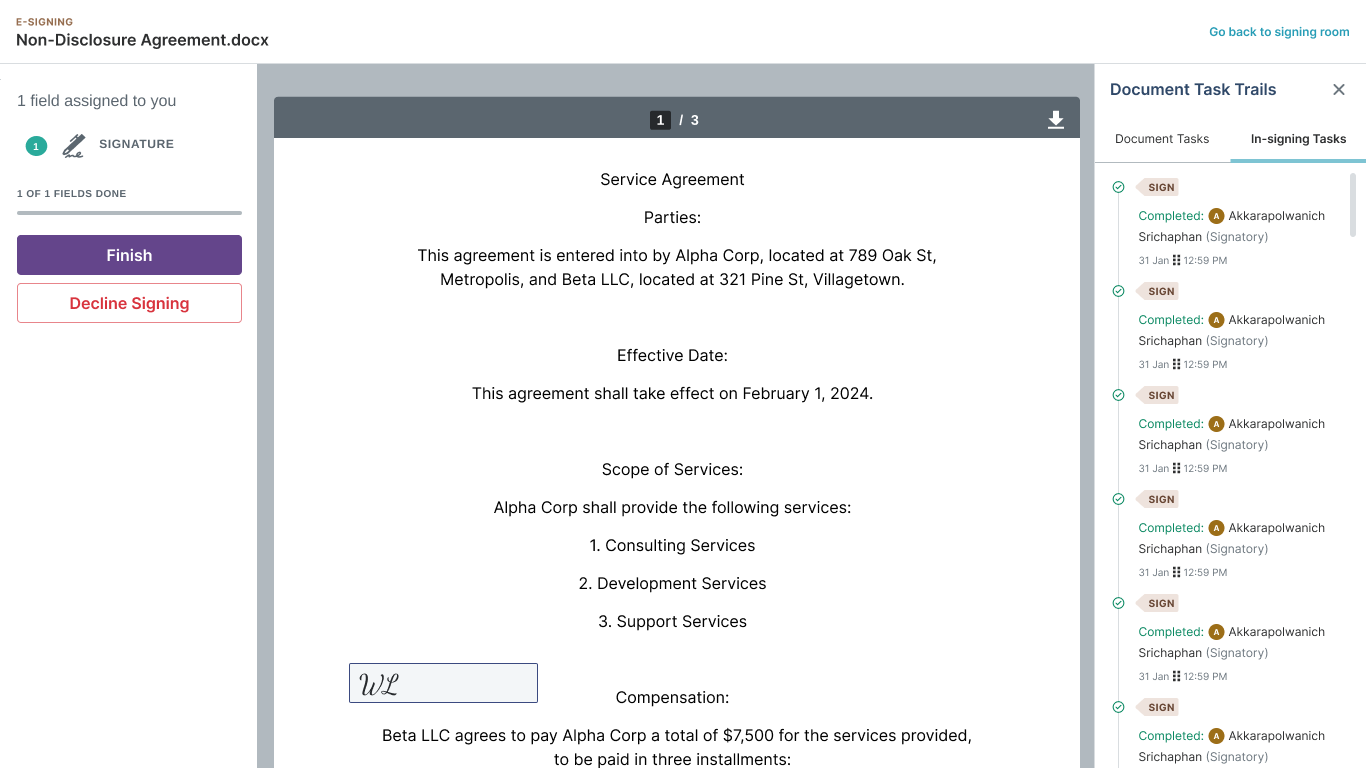
Step #1: Upload the Signature Image. Upload your signature PNG to your platform. Your digital signing platform will bind this graphic directly to your company address and user identity.
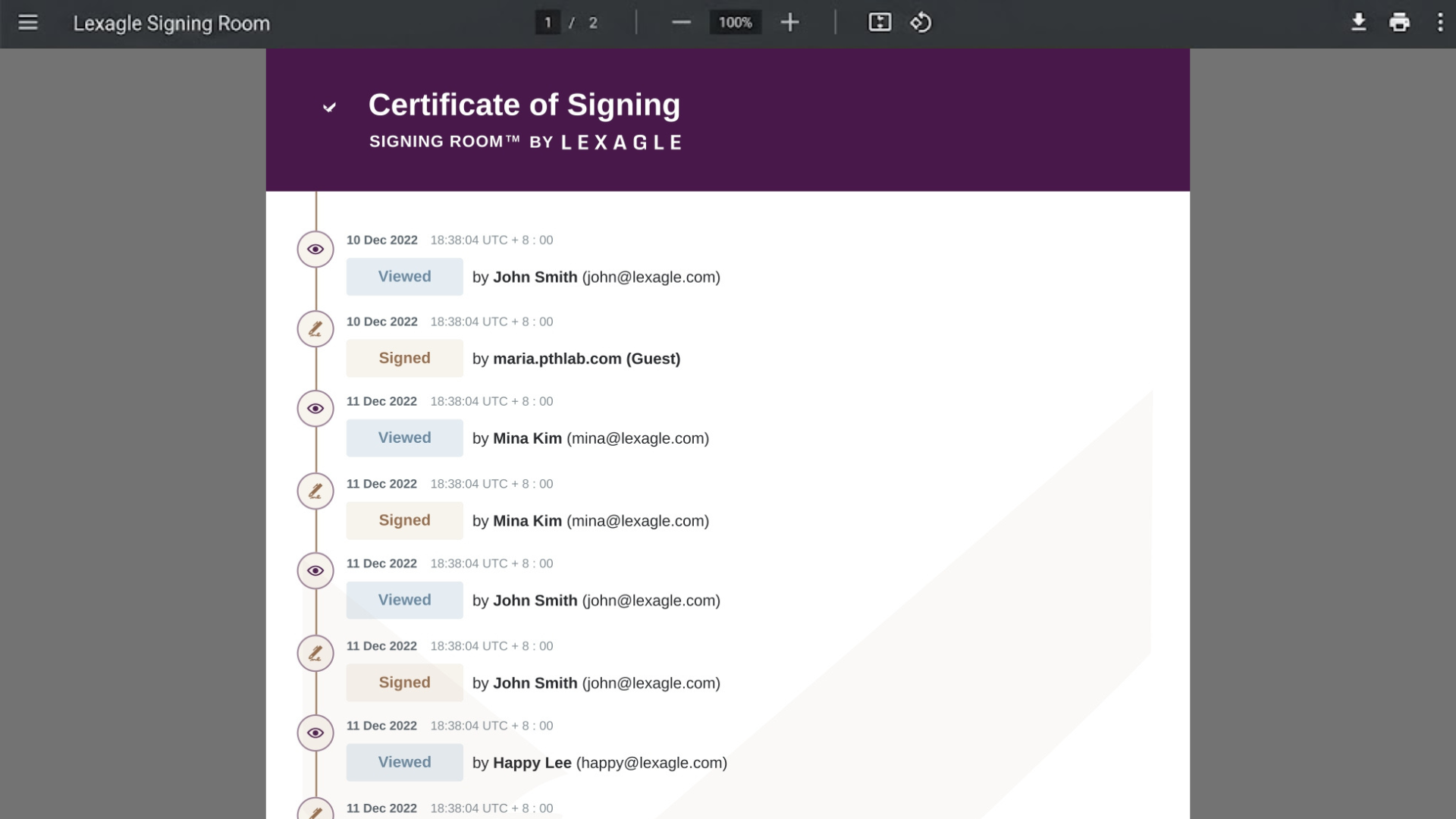
Step #2: Check for the Generated Compliance Safeguards. Once signed, the platform automatically attaches a digital certificate and a tamper-evident audit trail to the document. It also prevents any further signing or access if unauthorized modifications are made to the document post-signing. This ensures the contract’s absolute validity and security, which are critical for business operations.
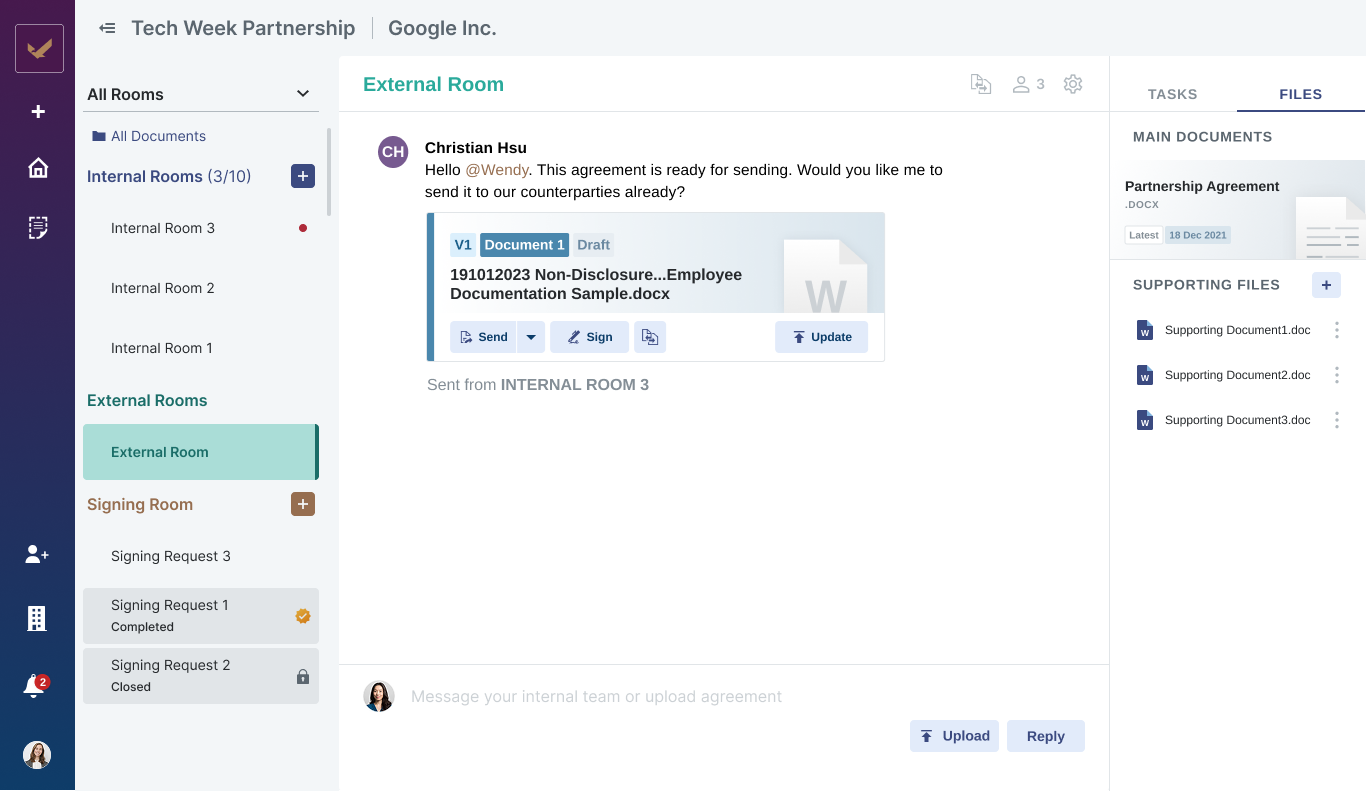
Step #3: Configure the Automated Signing Workflow. These platforms allow you to set up a sequential signing order for multi-party agreements. The system automatically routes the document to the first signatory and passes it to the next party only after the previous signature is secured. This automation ensures the final, fully executed version is securely archived without ever getting lost in email threads.
Disclaimer: This article is intended for informational purposes only and should not be considered legal advice. Lexagle does not provide legal services. Readers should consult a qualified legal professional for advice regarding their specific legal matters.


