Contract Tracking Software: How to Choose the Right Solution For Your Business in 2026
Written By
Aldrin Macatangay
Updated on
July 28, 2026
Reading time:
0
minutes
As the number of agreements grows, manually tracking contract obligations, deadlines, and renewals becomes increasingly difficult and prone to human error. Contract tracking software addresses this challenge by centralizing contract monitoring and automating these manual processes.
However, choosing the right solution for your business can be challenging. To help you make an informed decision, this buyer's guide explains what contract tracking software is, the key features to look for, the leading solutions in 2026, why organisations invest in them, and which business teams benefit the most.
KEY TAKEAWAYS
Contract tracking software centralises contract monitoring by tracking obligations, milestones, renewals, and deadlines while automating reminders and improving visibility across the contract portfolio of your organisation.
When comparing solutions, prioritise contract tracking tools with AI-powered automation, obligation tracking, reporting dashboards, smart search, integrations, and intuitive interface.
For most organisations, the best contract tracking solutions are built into the contract lifecycle management (CLM) platform, enabling connected workflows from contract creation through post-signature monitoring and renewal.
Thank you!
You email has been subscribed to our newsletter.
Oops! Something went wrong while submitting the form.
Contract Tracking Software: How to Choose the Right Solution For Your Business in 2026
As the number of agreements grows, manually tracking contract obligations, deadlines, and renewals becomes increasingly difficult and prone to human error. Contract tracking software addresses this challenge by centralizing contract monitoring and automating these manual processes.
However, choosing the right solution for your business can be challenging. To help you make an informed decision, this buyer's guide explains what contract tracking software is, the key features to look for, the leading solutions in 2026, why organisations invest in them, and which business teams benefit the most.
KEY TAKEAWAYS
Contract tracking software centralises contract monitoring by tracking obligations, milestones, renewals, and deadlines while automating reminders and improving visibility across the contract portfolio of your organisation.
When comparing solutions, prioritise contract tracking tools with AI-powered automation, obligation tracking, reporting dashboards, smart search, integrations, and intuitive interface.
For most organisations, the best contract tracking solutions are built into the contract lifecycle management (CLM) platform, enabling connected workflows from contract creation through post-signature monitoring and renewal.
What Is Contract Tracking Software?
Contract tracking software is a solution that centralises contract monitoring by tracking obligations and milestones (e.g. renewal dates & deadlines). It automates reminders and notifications while providing dashboards that give teams greater visibility into contract status and upcoming actions.
The primary purpose of a contract tracking software is to eliminate the risks associated with manual tracking through spreadsheets, shared folders, or email, which can lead to missed deadlines, lost contracts, overlooked obligations, and compliance gaps.
Contract tracking is typically a core capability within a CLM platform rather than a standalone platform, where it works with features such as contract drafting, contract redlining, and e-signature workflows.
Key Features to Look for in Contract Tracking Software
At their core, contract tracking software solutions share the following set of capabilities. Use the following features as a checklist when evaluating and comparing different tools.
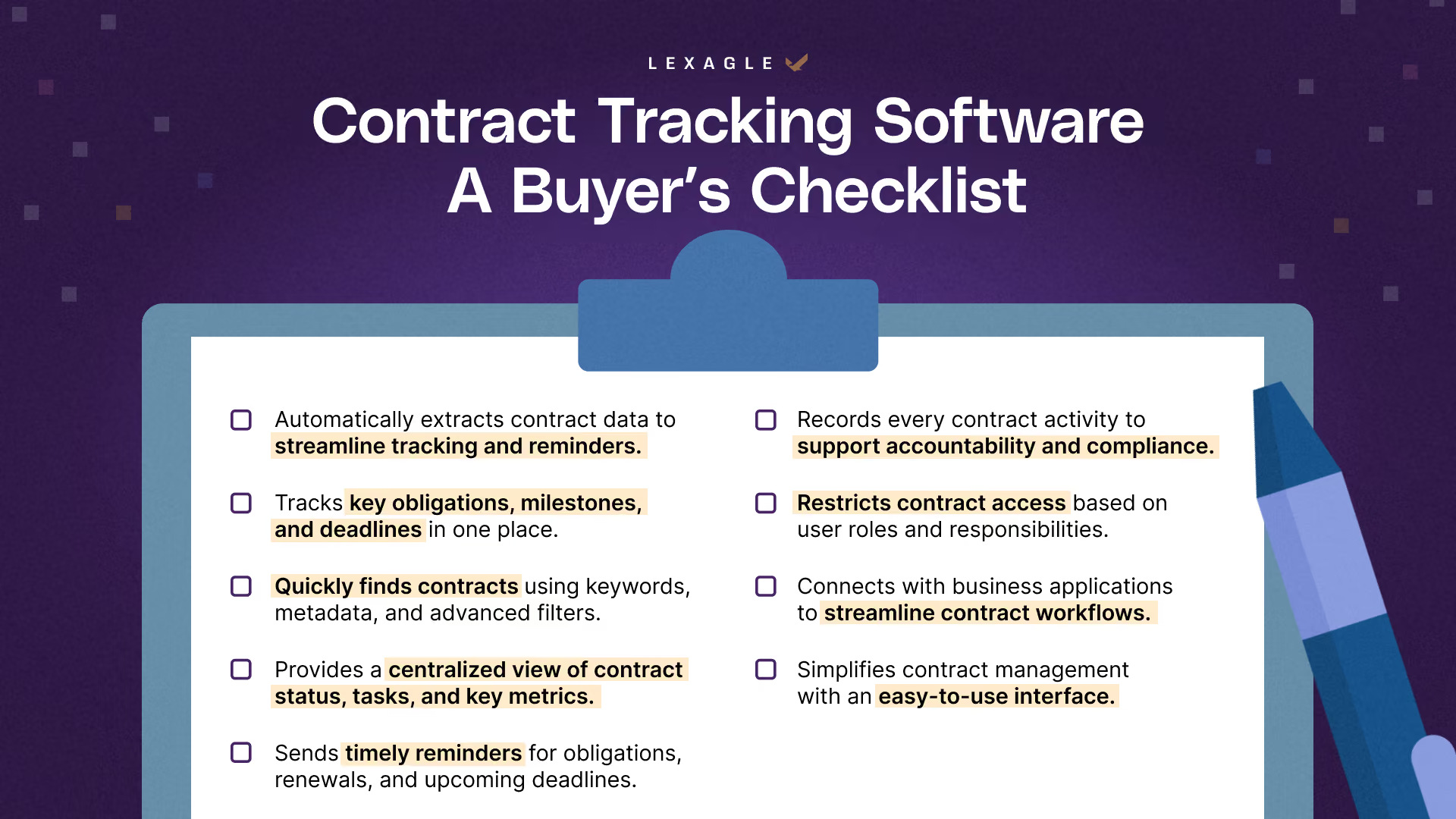
Contract Tracking Software: A Buyer's Checklist
1. Obligation Tracking
Tracks key contract dates alongside contractual obligations, such as payment schedules, deliverables, and other critical commitments.
2. AI Metadata Extraction
Automatically extracts key contract information, such as parties, payment dates, expiration dates, and renewal terms, and uses these fields to automatically generate reminders.
3. Automated Notification and Reminders
Sends email or in-app notifications for assigned tasks, obligations, upcoming deadlines, and renewals. The contract tracking platform should be able to automatically trigger notifications using extract contract metadata to minimise manual setup.
4. Reporting Dashboard
Provides a visual overview of contract status (e.g., active, completed, or overdue), upcoming obligations and milestones, assigned stakeholders, key tasks, renewals, and other metrics for easier contract monitoring.
5. Smart Search & Filtering
Enables users to quickly locate agreements and related documents using keywords, metadata, and filters, such as agreement type, counterparty, contract owner, status, deadline, or renewal date to name a few. This improves contract monitoring and retrieval.
6. Platform Integrations
Allows integration with business applications, like e-signature solutions and calendar platforms (e.g., Microsoft Outlook), to synchronise contract workflows and reminders.
7. Role-Based Access Control (RBAC)
Permits control of user permissions based on roles, ensuring only authorised users can view and manage contracts while maintaining accountability and security.
8. Audit Trails
Maintains a complete history of activities, recording who performed each action, what changes were made, and when they occurred. This supports accountability, compliance, and dispute resolution.
9. Intuitive User Experience
Features a straightforward, easy-to-navigate interface that enables legal and business teams to quickly search contracts, monitor obligations, and complete tasks with minimal training and faster adoption.
AI CLM for Contract Tracking
Looking for These Contract Tracking Features?
Discover how Lexagle helps teams easily find agreements, track obligations, automate reminders, and gain complete visibility into every stage of the contract lifecycle with AI.
The following are some of the leading contract tracking software solutions in 2026. Compare them using the feature checklists below to determine which platform best meets your requirements.
Aspect
Lexagle
Ironclad
Sirion
DocuSign
Icertis
Best Suited For
Organisations seeking a comprehensive yet easy-to-use AI-powered contract tracking solution built into a CLM platform
Enterprises seeking structured contract tracking with workflow automation and centralised contract management
Enterprises prioritising obligation management and contract governance
Organisations already using DocuSign that need contract tracking
Enterprises with complex contract governance and compliance requirements
Ease of Adoption
✅ Rapid adoption ✅ Minimal training ✅ Intuitive interface
✅ User-friendly interface (may require additional training for workflow configuration)
✅ Intuitive for core functions (may require steeper learning curve for advanced capabilities)
✅ Native CLM ✅ E-signatures✅ Native Microsoft Outlook integration
✅ Native CLM ✅ E-signatures
✅ Native CLM ✅ E-signatures
✅ Native CLM ✅ E-signatures
✅ Native CLM ✅ E-signatures
Core Contract Tracking Capabilities
Feature
Lexagle
Ironclad
Sirion
Docusign
Icertis
AI Metadata Extraction
Yes
Yes
Yes
Yes
Yes
Obligation Tracking
Yesw/ dedicated obligations view
Yesw/ dedicated obligations view
Yes
Yesw/ dedicated obligations view
Yesw/ dedicated obligations view
Renewal & Expiration Tracking
Yes
Yes
Yes
Yes
Yes
Automated Alerts & Notifications
Yes
Yes
Yes
Yes
Yes
Reporting Dashboard
Yes
Yes
Yes
Yes
Yes
Smart Search
Yesw/ OCR
Yesw/ OCR
Yesw/ OCR
Yesw/ OCR
Yesw/ OCR
Advanced Filtering
Yesw/ conditional statements
Yesw/ conditional statements
Yesw/ conditional statements
Yes
Yesw/ conditional statements
Security & Governance
Feature
Lexagle
Ironclad
Sirion
Docusign
Icertis
Role-Based Access Permissions
Yes
Yes
Yes
Yes
Yes
Audit Trails
Yes
Yes
Yes
Yes
Yes
Workflow Ownership
Yes
Yes
Yes
Yes
Yes
Integrations & Ease of Use
Feature
Lexagle
Ironclad
Sirion
DocuSign
Icertis
Low Learning Curve
Yes
Partial YesSteep learning curve during configuration phase
Partial YesSteep learning curve for advanced features
Yes
No
Intuitive UI
Yes
Yes
Yes
Yes
No
CLM Integration
Native
Native
Native
Native
Native
E-signature Integration
Yes
Yes
Yes
Yes
Yes
Calendar Sync
YesNative Outlook integration
NoRequires API
NoRequires API
NoRequires API
Yes
API Integration
Yes
Yes
Yes
Yes
Yes
Why Get Contract Tracking Software in 2026?
In 2026, having a contract tracking solution is no longer a “nice to have”, but a necessity for organisations managing a growing volume of agreements. It addresses many of the challenges associated with manual contract tracking while introducing automation and greater visibility into the contract performance.
Much like how contract redlining software solves the problem of manual redlining workflows, contract tracking platforms help teams monitor obligations, stay ahead of deadlines, and maintain accountability.
Challenge of Manual Contract Tracking
How Contract Tracking Software Solves It
Time-consuming manual monitoring
Automatically tracks key dates and sends reminders and notifications before renewals, expirations, payment deadlines, and notice periods. This significantly reduces administrative effort and ensures compliance.
Limited visibility into contract status
Provides dashboards that show contract status, upcoming obligations, renewals, and assigned tasks in one place.
Difficulty locating contracts
Consolidates agreements and their related attachments in a single searchable repository for ease of access.
Poor accountability
Tracks responsibilities and contract owners, making it clear who is responsible for each obligation or task.
Disconnected business processes
Integrates with calendars, e-signature platforms, and other business systems to keep workflows synchronized.
Who Uses Contract Tracking Tools?
While contract tracking platforms can benefit organisations of all sizes, it is particularly valuable for businesses dealing with an increasing volume of agreements.
As contracts involve multiple stakeholders across their lifecycle, different business teams rely on contract tracking tools to monitor deadlines, fulfill obligations, and maintain visibility into contract status.
Business Team
Why Contract Tracking Tools Matter
Legal
Monitors contractual obligations, renewal dates, and compliance requirements while maintaining oversight of the contract portfolio.
Sales
Tracks customer agreement renewals, commercial commitments, and upcoming milestones to support account management.
Procurement
Monitors supplier contracts, renewal windows, payment terms, and vendor obligations to ensure steady daily operations.
Finance
Keeps track of payment schedules, contract values, budgeting commitments, and financial obligations tied to agreements.
HR
Tracks employment agreements, onboarding documents, policy acknowledgments, and key contract milestones such as probation and renewal dates.
If your teams are spending too much time manually tracking agreements, it may be time to adopt a solution that centralises agreements, automates reminders, and provides complete visibility into every stage of the contract lifecycle. Explore how Lexagle helps businesses track contracts more effectively with AI.
Share this article
author
Aldrin Macatangay
Aldrin is the Junior SEO Content Specialist at Lexagle. With his background in B2B SaaS, Aldrin specializes in translating technical business concepts into clear and digestible insights for business leaders and professionals.
Aldrin is the Junior SEO Content Specialist at Lexagle. With his background in B2B SaaS, Aldrin specializes in translating technical business concepts into clear and digestible insights for business leaders and professionals.












.png)
.png)
.png)
.png)
.png)
.png)
.png)
.png)