








.png)
.png)
.png)
.png)
.png)
.png)
.png)
.png)

Free Contract Amendment Template (w/ Customizable Fields)
Before starting the writing process, it helps to see a structural blueprint. To help you visualize its content and layout, we provide a customizable contract amendment template below. You can copy the text directly from the container below and paste it straight into Microsoft Word or Google Docs to begin customizing it for your business.
How Businesses Draft Compliant Amendments: A Step-By-Step Guide
Now that you have a visual idea of the layout, here are steps many businesses conduct to amend their contracts. You can follow these steps to edit the template above or build your own amendment from scratch:
Step 1: Establish Structural and Visual Continuity
Prepare the amendment using the same document size, margins, and general formatting as the original agreement. Maintaining visual uniformity signals continuity and preserves a professional appearance.
Step 2: Explicitly Identify the Original Agreement
Clearly state the exact title and the original execution date of the parent contract. This establishes a direct connection between the amendment and the agreement it revises.
Step 3: Restate the Contracting Parties
List the official legal names, entity types, and corporate addresses of all original parties. Restating these details eliminates ambiguity regarding exactly who is bound by the new modifications.
Step 4: Indicate the Effective and Execution Dates
Provide the execution date (the date the amendment is signed) and the effective date (the precise date when the new terms will take effect).
Step 5: Outline and Explain Modifications Clearly
Precisely identify which provisions are being altered or deleted. Limit the scope strictly to the provisions being modified.
Accompany the revisions or removals with a clear explanation of what has been changed. For example:
This amendment deletes Section [X] in its entirety and substitutes it with the following: ‘[new provision].’
Step 6: Protect Unchanged Terms
Always include a provision confirming that all unaffected terms remain fully enforceable. This protects the contract from invalidation. You can phrase this as:
Except as expressly revised by this Amendment, all provisions of the Original Agreement shall continue in full force and effect
Step 7: Include a Non-Variation Clause
Explicitly state that no further changes can be made. The amendment must mandate that any future modifications must be done through another written document signed by all authorized parties.
Step 8: Provide Signature and Notary Blocks
Add dedicated signature blocks for each party, including their names, official designations, and dates of execution. Ensure that the individuals signing have the actual delegated authority to bind the business to these new financial or operational terms.
Step 9: Run a Compliance Audit of the Amendment
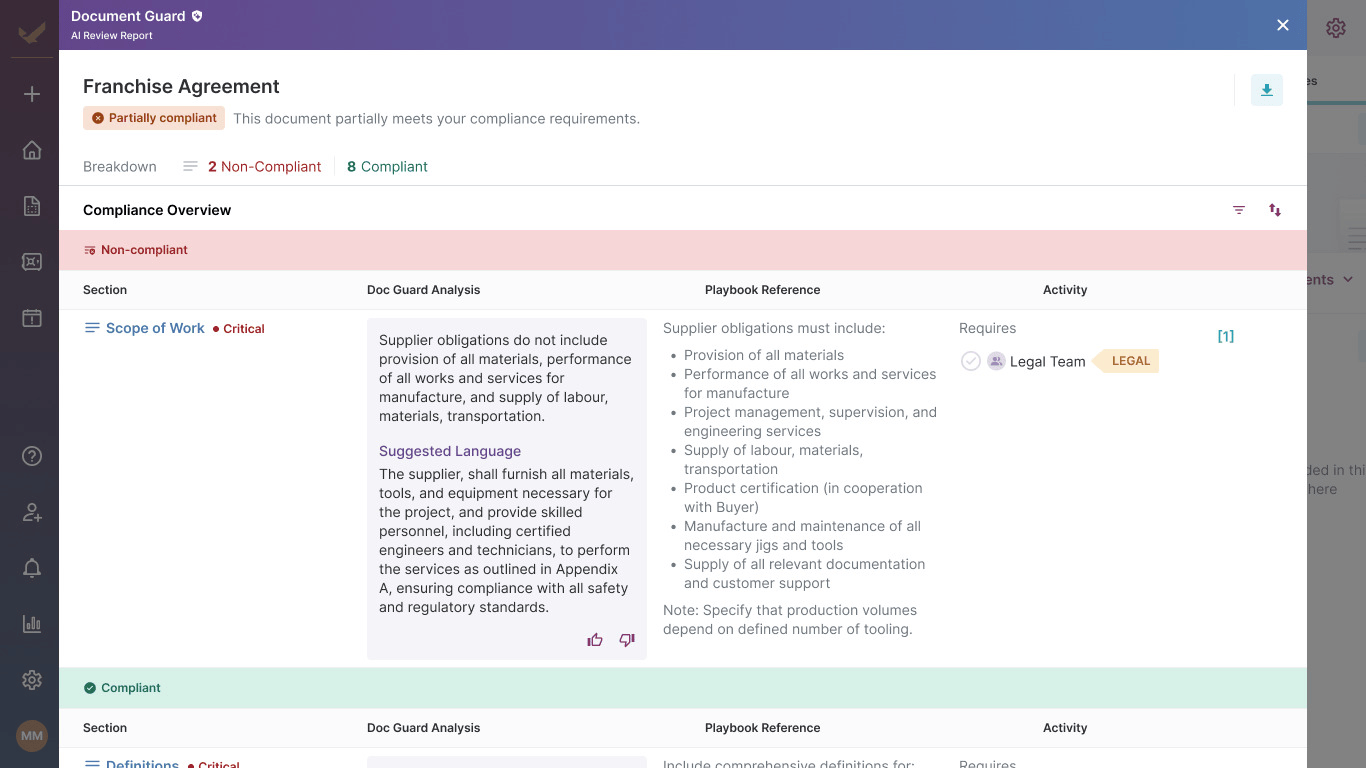
Before routing the document for approvals and signatures, check if the modified or omitted clauses conflict with the terms of the original contract or create compliance risks. Moreover, review if the clauses in your amendment draft are aligned with internal playbooks and regulatory requirements.
Doing all of these manually can be prone to errors, especially when it comes to finding missing clauses. To maintain compliance, businesses use advanced contract lifecycle management solutions that can review clauses within any document — not just agreements. These platforms provide a redlining feature that not only flags clauses that deviate from internal playbooks and regulatory standards, but also identifies clauses that are necessary but missing.
Contract Amendment Example
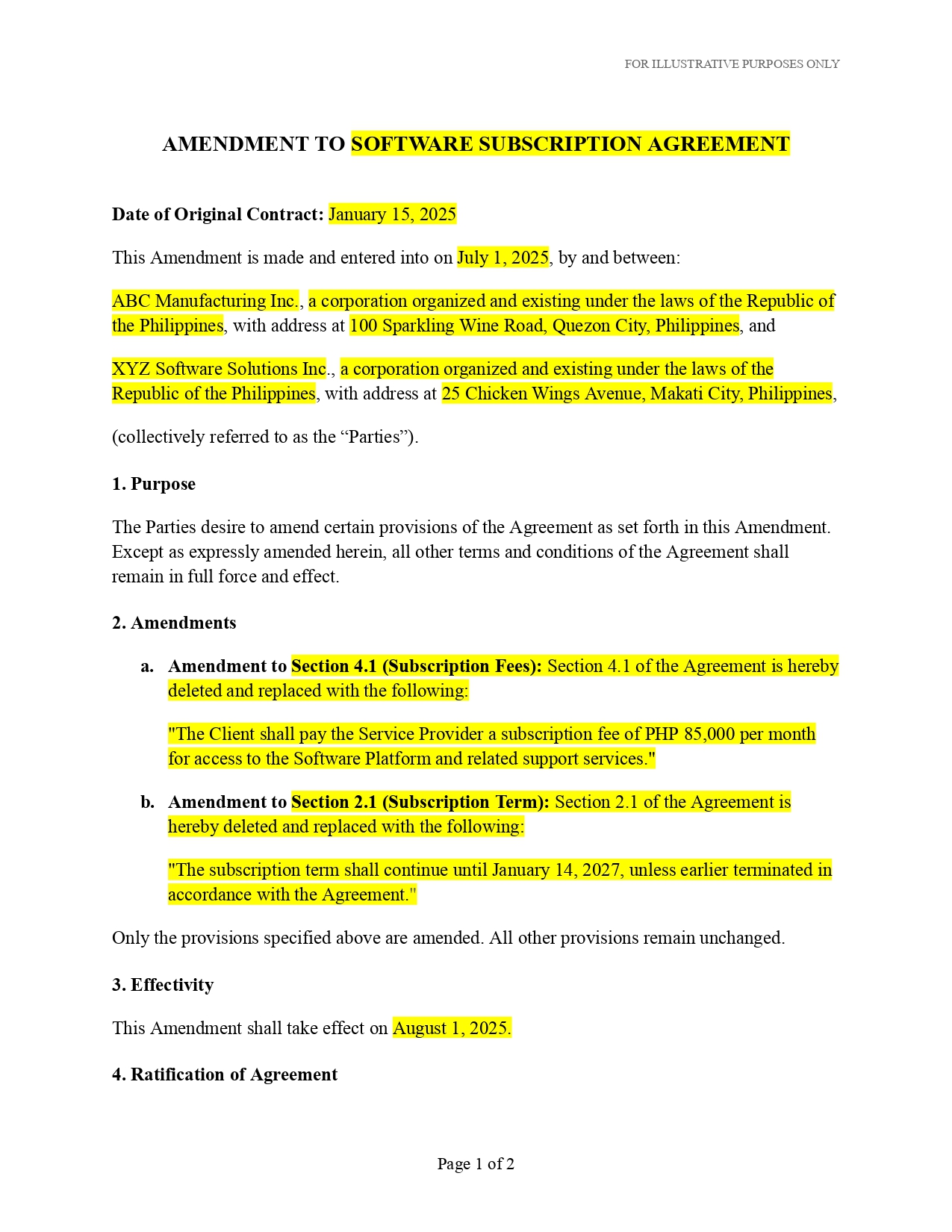
To see how these principles and playbooks apply in a real-world scenario, consider a software subscription agreement between a manufacturing company and a software provider.
After several months of using the platform, the client decides to expand the usage across additional departments and commit to a longer subscription term. Because these changes affect existing provisions relating to pricing and contract duration, the parties cannot simply add information to the agreement.
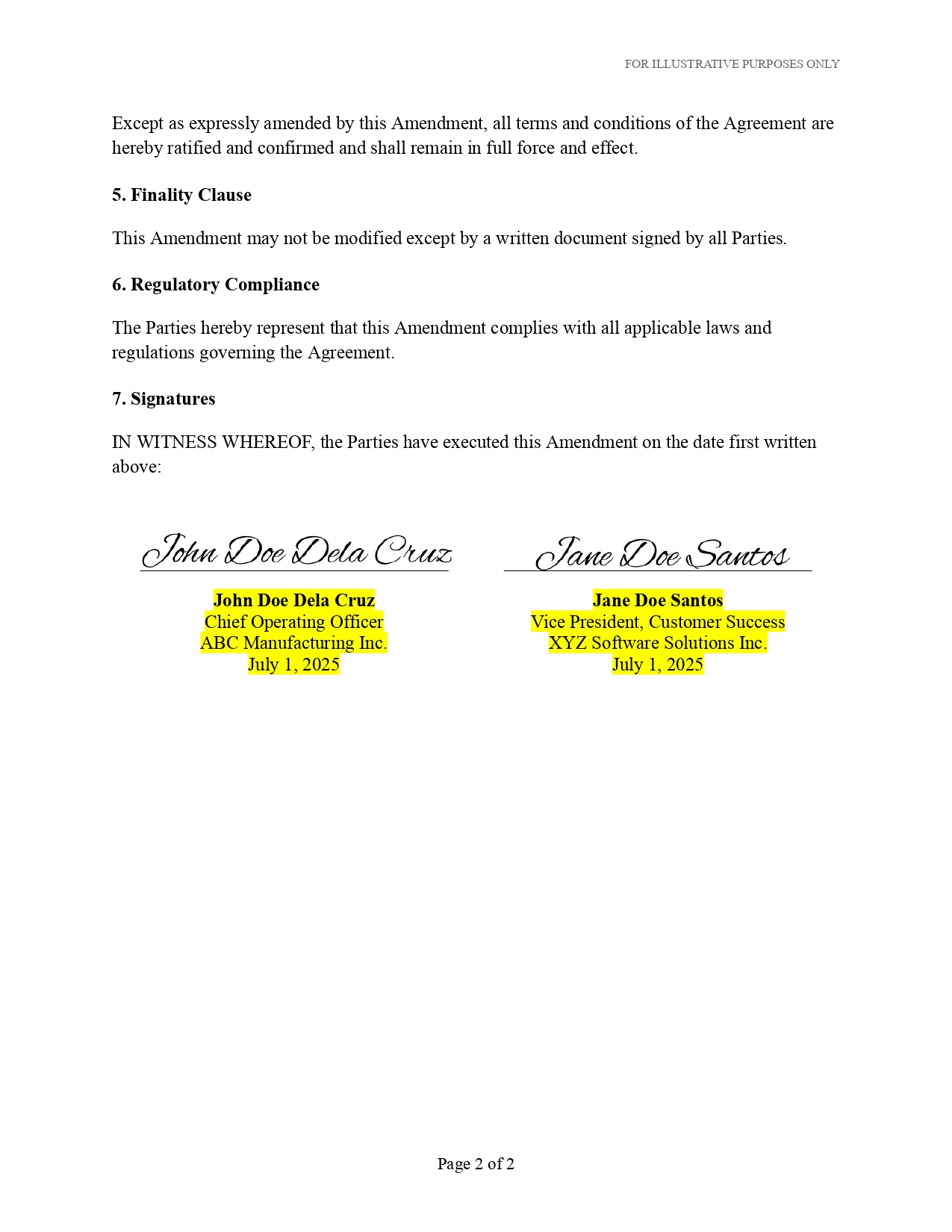
The example below demonstrates how a completed contract amendment may look when modifying subscription fees and extending the term of an active software subscription agreement.
Contract Amendment Checklist: Before Sending Your For Signatures
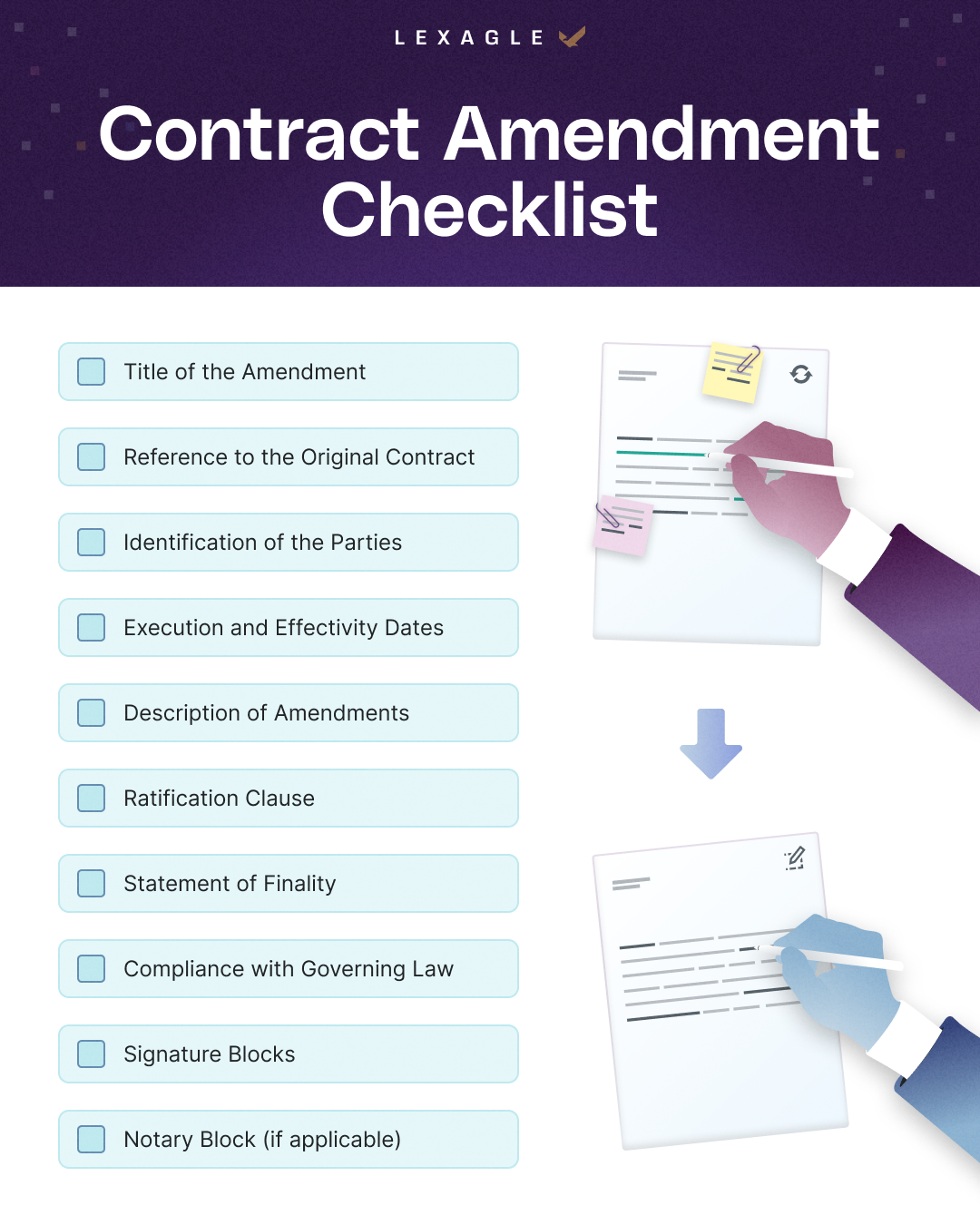
After drafting the amendment, the next step is to send it for review and signatures. Before routing the document for approval, it is important to verify that all critical information has been included. Missing references, unclear revisions, or incomplete details can easily create delays.
Use the checklist below to confirm that your amendment is complete, compliant, and ready for signatures.
As contractual relationships grow and the number of amendments increases, manually reviewing them, routing them for approvals and signatures, and storing them alongside their parent contracts can become a tedious process.
To solve this, many organizations use a CLM solution with built-in tools designed not just for core agreements, but for all supplementary documents like amendments.
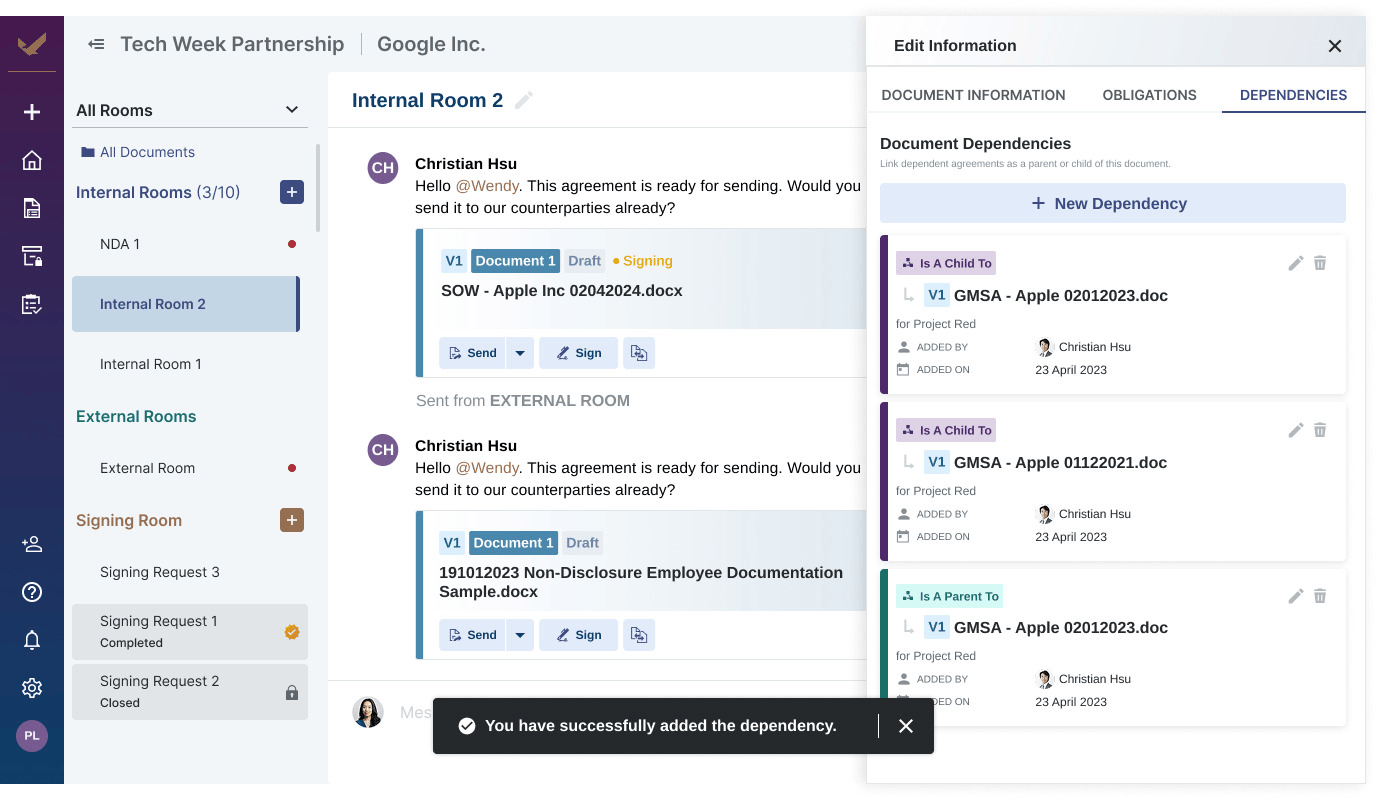
This software enables teams to automatically audit for compliance, build structured internal and external approval workflows, request digital signatures from various organizational stakeholders and counterparties, and securely store the amendment linked to its parent file. This centralized approach eliminates the headache of managing multiple disjointed systems, reducing the risk of critical compliance issues.