








Are Digital Signatures Legally Binding in Malaysia?
Yes, digital signatures are legally binding and hold the same status as handwritten signatures in Malaysia when they comply with the relevant statutory requirements. The legal validity of a digital signature in Malaysia is primarily established under the Digital Signature Act 1997 (DSA 1997), which provides a clear framework for secure electronic authentication in commercial transactions.
The Legal Landscape: DSA 1997 vs. ECA 2006
Malaysia adopts a dual-track legal framework that distinguishes between digital signatures and electronic signatures.
The Digital Signature Act 1997 (DSA) of Malaysia specifically governs digital signatures. Section 62 of the Act states that a document signed with a valid digital signature is as legally binding in Malaysia as a handwritten signature. This provides strong legal certainty for businesses engaging in high-value or regulated transactions, particularly where security and authentication are critical.
In contrast, Malaysia’s Electronic Commerce Act 2006 (ECA) regulates electronic signatures used in commercial transactions. Under the ECA, an electronic signature refers broadly to any electronic symbol, character, or process adopted to sign a document. The Act ensures that a signature cannot be denied legal effect solely because it is in electronic form, supporting the growth of digital business practices and paperless workflows.
Licensed Certification Authorities and Regulatory Oversight
While both digital and electronic signatures are recognised under Malaysian laws, digital signatures carry a higher level of assurance because they require verification through a Licensed Certification Authority (LCA). These authorities issue digital certificates that authenticate the identity of the signatory and ensure document integrity.
LCAs must be approved by the Malaysian Communications and Multimedia Commission (MCMC), the regulatory body overseeing digital signature infrastructure in the country. Examples of MCMC-approved digital signature providers include MSC Trustgate and Pos Digicert.
Because digital signatures rely on cryptographic verification and certified authentication, they are generally considered more secure and reliable than standard electronic signatures. This makes them particularly suitable for organisations seeking stronger Malaysian contract law compliance, enhanced security, and reduced legal risk in business agreements.
Understanding this distinction is essential when choosing a digital signature provider in Malaysia, as the level of legal certainty and regulatory compliance can vary depending on the type of signature used.
Digital vs Electronic Signatures in Malaysia: Which Should You Use?
Understanding the difference between electronic and digital signatures is essential for organisations seeking the right level of security and legal certainty. Although the terms are often used interchangeably, the distinction between an electronic and a digital signature in Malaysia has important legal and compliance implications.
What Is an Electronic Signature?
An electronic signature refers broadly to any letter, character, symbol, or process in electronic form that a person adopts to sign a document. This can include:
- A scanned handwritten signature
- A typed name at the end of an email
- Clicking an “I agree” button
- A digital image attached to a contract
Electronic signatures are recognised under the Electronic Commerce Act 2006 and are commonly used for routine commercial transactions and internal approvals. However, the law provides a broad definition, and certain aspects of its application remain largely untested in Malaysian courts. This leaves potential grey areas around authentication, evidentiary weight, and enforceability in high-stakes disputes.
What Is a Digital Signature?
A digital signature is a specific type of electronic signature that uses a cryptographically secure transformation of a message to verify the identity of the signer and ensure document integrity. It operates through an asymmetric cryptosystem, where encryption keys authenticate the transaction and detect any unauthorised changes.
To be legally recognised under the Digital Signature Act 1997, digital signatures must be supported by a digital certificate issued by a Licensed Certification Authority approved by the Malaysian Communications and Multimedia Commission (MCMC).
Because digital signatures rely on certified authentication and encryption technologies, they provide stronger identity verification, enhanced security, and clearer legal assurance.
Which Should You Use?
The choice between electronic and digital signatures depends largely on the level of risk and regulatory requirements involved.
Electronic signatures may be suitable for low-risk or routine business processes where speed and convenience are the primary concerns. However, due to the broader definition under the ECA 2006 and the limited judicial testing of certain provisions, organisations handling high-value contracts, regulated transactions, or sensitive data often prefer digital signatures.
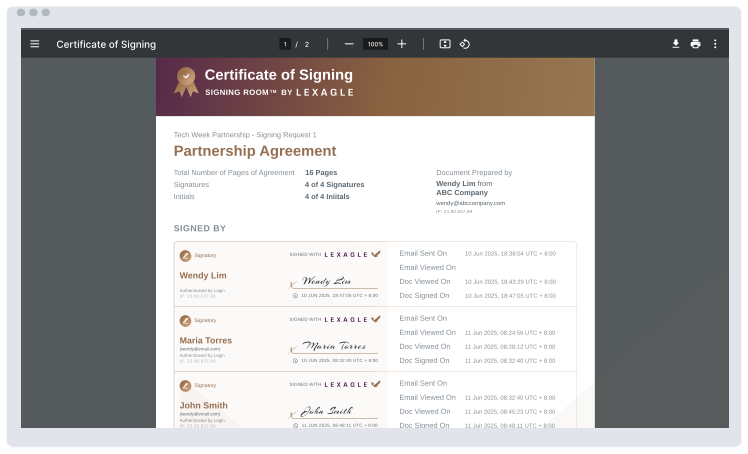
Digital signatures offer greater legal credibility, stronger Malaysian contract law compliance, and reduced risk of disputes because they require verification through a Licensed Certification Authority and provide a secure audit trail. For businesses seeking reliable authentication and long-term enforceability, digital signatures are generally the more secure and defensible option.
What Cannot Be Signed Digitally in Malaysia?
Certain high-stakes legal documents still require physical “wet-ink” signatures and cannot be executed solely through electronic or digital means. While a digital signature in Malaysia is legally recognised for most commercial transactions, specific legal instruments remain excluded to ensure stricter authentication, witnessing, and compliance.
Documents That Require Wet-Ink Signatures
Under the Electronic Commerce Act 2006, some documents are explicitly excluded from electronic execution. These documents include:
- Wills and codicils
- Trusts
- Power of Attorney
These documents often involve significant personal or legal consequences. Therefore, it requires traditional signing methods to prevent disputes and ensure proper verification.
In addition, instruments dealing with property matters under the National Land Code must generally be executed using physical signatures. This includes various land office documents related to property ownership, transfers, and registration. Documents requiring attestation by a Notary Public or Commissioner for Oaths must also be signed in person.
Regulatory Considerations and Remote Witnessing
Beyond statutory exclusions, regulatory practice also influences how documents should be executed. The Malaysian Bar has expressed caution regarding remote witnessing arrangements, as the legal framework surrounding such practices remains uncertain. As a result, traditional in-person witnessing and wet-ink signatures continue to be recommended for documents requiring formal attestation.
Understanding these limitations helps organisations manage expectations when adopting secure digital signing solutions. While digital signatures support most business and commercial agreements, certain legal processes still require conventional execution methods to meet Malaysian contract law compliance requirements.
Why Lexagle is the Best DocuSign Alternative in Malaysia
Lexagle offers a faster, more affordable, and AI-integrated experience specifically optimised for the Malaysian and APAC regulatory landscape. As businesses seek a reliable DocuSign alternative in Malaysia, many are moving beyond basic e-signature tools towards platforms that provide stronger compliance, automation, and end-to-end contract management capacities.
Global providers such as DocuSign are widely used, but Malaysian organisations often face challenges related to high costs, complex implementation processes, and limited regional customisation. Lexagle addresses these concerns by delivering a cost-effective e-signature and Contract Lifecycle Management (CLM) software solution designed for local business needs.
Stronger Compliance and Regional Adaptability
Regulatory compliance remains a key concern for organisations managing contracts across multiple jurisdictions. Lexagle is built with deep Malaysian and APAC compliance capabilities, enabling businesses to align with local legal frameworks and regional data requirements.
The platform supports regional hosting infrastructure, including deployments in Singapore, helping organisations meet data residency expectations while maintaining secure and legally binding digital signing processes. This jurisdictional adaptability makes it particularly suitable for companies operating across Southeast Asia.
Cost-Effective Solution for Malaysian Businesses
Many global digital signature platforms are perceived as expensive for small and mid-sized organisations in Malaysia, especially when additional features or enterprise integrations are required. Lexagle provides transparent and competitive pricing tailored to the regional market, allowing businesses to adopt secure digital signing and automation without the overhead typically associated with global enterprise tools.
This cost advantage makes Lexagle a practical choice for organisations seeking a scalable and cost-effective e-signature solution without compromising on compliance or functionality.
AI-Powered Contract Intelligence with Lexagle AI
Unlike traditional signing tools, Lexagle integrates AI-driven automation throughout the contract lifecycle. Lexagle AI supports:
- Automated contract review and clause analysis
- Intelligent redlining and version comparison
- Risk assessment and compliance checks
- Smart metadata and obligation tracking
These capabilities significantly reduce manual work, improve accuracy, and help legal, procurement, and HR teams manage contracts more efficiently. By combining secure digital signatures with AI-powered contract management, Lexagle goes beyond basic execution to optimise the entire contract workflow.
Faster Implementation and User Adoption
Implementation speed is another key differentiator when comparing Lexagle with DocuSign. While global enterprise platforms may require 6 to 12 months for full deployment, Lexagle typically completes implementation within 1 to 3 months. Its intuitive interface and streamlined onboarding process also reduce the need for extensive training or change management.
This faster rollout enables organisations to achieve quicker returns on investment while improving operational efficiency across contract drafting, approval, signing, and post-signature management.
By combining APAC compliance, affordability, AI-driven automation, and reasonable implementation time, Lexagle provides a comprehensive CLM software solution for Malaysian organisations seeking a secure and scalable digital signature provider.
How Lexagle AI Transforms Contract Workflows
Lexagle’s AI automates tedious manual tasks such as contract review, clause extraction, and risk assessment, enabling organisations to manage agreements faster and with greater accuracy. By integrating AI throughout the contract lifecycle, the platform helps businesses reduce administrative workload while strengthening compliance and operational efficiency.
AI-Powered Contract Review and Drafting
Lexagle AI assists with initial contract drafting and AI-powered contract review, significantly accelerating the preparation process. The system analyses document content, identifies key clauses, and performs smart clause extraction to organise important contract data automatically.
This automation helps legal and procurement teams review agreements more efficiently, reducing reliance on manual processes and minimising the risk of human error.
Automated Redlining and Risk Detection
One of the platform’s core capabilities is automated redlining, which compares contract versions and highlights changes instantly. Teams can also evaluate third-party contracts against internal playbooks, allowing the system to flag non-compliant clauses and potential risks in real time.
This proactive risk detection strengthens Malaysian contract law compliance and ensures that organisations maintain consistent contract standards across departments.
Faster Contract Cycles and Greater Productivity
By automating routine tasks, Lexagle AI reduces the average contract cycle time by up to 70%. Legal, procurement, and HR teams spend less time on administrative work and more time on strategic decision-making, negotiation, and business growth.
Through intelligent automation, streamlined workflows, and enhanced visibility into contract obligations, Lexagle AI enables organisations to transform traditional contract management into a faster, more efficient, and data-driven process.
The Future: ASEAN Cross-Border Interoperability
A unified digital identity system, known as the Unique Business Identification Number (UBIN), is being developed to reduce friction in regional trade. As digital economies across Southeast Asia become more interconnected, initiatives such as UBIN ASEAN and the ASEAN Digital Economy Framework Agreement (DEFA) aim to strengthen regional interoperability and enable seamless cross-border business operations.
A Digital Business Identity for Regional Trade
The UBIN functions as a digital business identity, serving as a “digital passport” for companies operating within the Association of Southeast Asian Nations. Once a business is verified in Malaysia, its credentials can be recognised across other member states, including Singapore and Indonesia.
This digital identity framework streamlines onboarding, identity verification, and regulatory compliance for cross-border transactions. Instead of repeating verification processes in multiple jurisdictions, organisations can rely on a standardised system that improves efficiency and reduces administrative complexity.
Reducing Friction Through Regional Interoperability
The development of UBIN supports broader regional interoperability by creating common standards for digital transactions and authentication. Under DEFA, ASEAN member states are working towards harmonised digital regulations, trusted data flows, and interoperable digital infrastructure.
For businesses, this means fewer structural barriers when expanding across borders, faster contract execution, and improved regulatory alignment. The ability to rely on recognised digital signatures and verified identities across jurisdictions enhances trust while accelerating cross-border trade and collaboration.
Strategic Value for Malaysian Businesses
For organisations operating regionally, adopting secure digital signing and digital identity solutions positions them for future growth within the ASEAN digital economy. By supporting digital business identity frameworks and interoperable systems, businesses can scale operations more easily, reduce legal-related challenges, and participate in a more connected regional marketplace.
As ASEAN continues to strengthen its digital ecosystem, initiatives such as UBIN and DEFA are expected to unlock significant economic value by simplifying cross-border trade and enabling seamless digital transactions across the region.
Frequently Asked Questions (FAQ)
1. Is a digital signature valid for e-invoicing in Malaysia?
Yes, a digital signature is valid for e-invoicing in Malaysia and is becoming increasingly important as the government advances digital trade initiatives and paperless business processes. Secure digital signing helps ensure document both authenticity and integrity in electronic invoicing, supporting more efficient financial transactions and regulatory reporting.
2. What is the penalty for using non-compliant signatures?
Using non-compliant signatures may lead to significant legal and operational risks. These can include the potential invalidation of contracts, disputes over document authenticity, or challenges in enforcement during legal proceedings. Organisations that fail to meet Malaysian contract law compliance requirements may also face delays in regulatory approvals or commercial transactions.
3. Does MCMC recognise foreign digital certificates?
The Malaysian Communications and Multimedia Commission (MCMC) technically allows for the recognition of foreign digital certificates under certain conditions. However, there are currently no officially listed or widely recognised foreign Licensed Certification Authorities (LCAs). As a result, businesses typically rely on locally approved certification providers to ensure full legal certainty and regulatory compliance.
Conclusion: Future-Proofing Your Business with Lexagle
In today’s fast-paced Malaysian business landscape, adopting a comprehensive digital signature and contract lifecycle management (CLM) platform is no longer optional—it is essential. As companies face increasing regulatory demands, digital transformation pressures, and regional trade opportunities, relying on basic e-signatures alone can leave workflows slow, fragmented, and prone to errors.
Lexagle delivers a secure, fully compliant, and AI-driven solution that streamlines contract management from drafting to renewal. By moving beyond simple e-signatures, businesses gain faster approvals, reduced administrative burden, and greater transparency across legal, procurement, and HR operations. Lexagle empowers organisations to save time, reduce costs, and scale confidently in the evolving Malaysian and APAC markets.
Book your 15-minute session today to explore Lexagle’s legally binding, secure digital signing solution optimised for Malaysian and APAC regulatory requirements. Take the first step towards smarter, faster, and fully compliant contract management.